
When you hear the term “cupping therapy,” what comes to mind?
You may picture cups placed on the skin using suction, leaving round marks on the body.
At the same time, you may wonder: Can cupping therapy really help with symptoms such as shoulder stiffness, neck pain, or back pain?
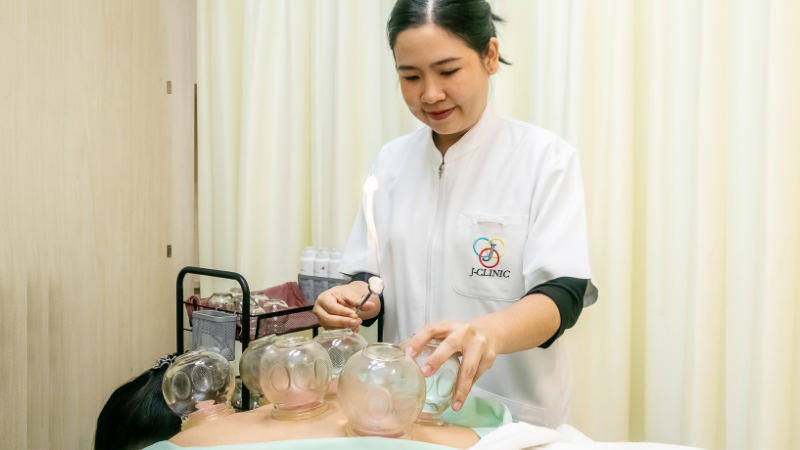
Cupping therapy is not simply about placing cups on the body.
At J-CLINIC, we use cupping as one of our treatment approaches. Before treatment, we assess muscle condition, body movement, and posture, and select the appropriate treatment areas and techniques based on each individual’s condition.
We Don’t Look Only at Where It Hurts
For example, if you have shoulder stiffness or neck pain, the cause of your symptoms may not be limited to the area where you feel the pain.
Long hours of desk work, staying in the same position for extended periods, or habitual movement patterns may place excessive stress not only on the neck and shoulders, but also on muscles around the chest and upper back.
That is why, before treatment, J-CLINIC looks beyond the location of your symptoms and assesses:
- The level of tension in different muscles
- How your body moves
- Characteristics of your posture
- Differences in how the muscles on each side of the body are being used
- Which muscles may be associated with your symptoms
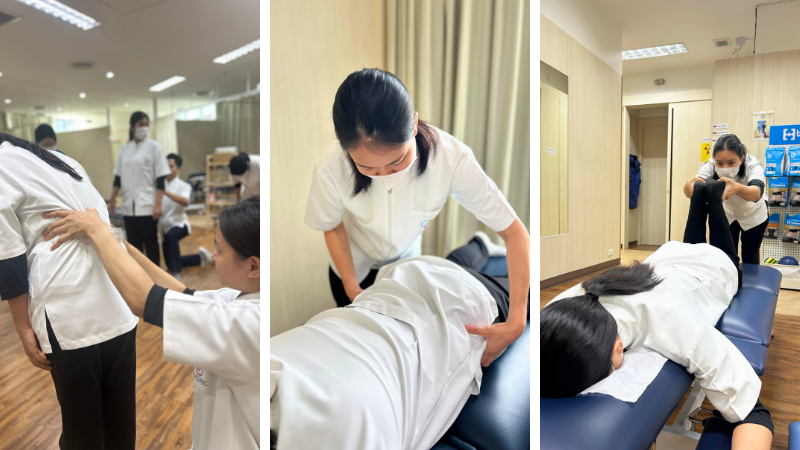
Based on this assessment, we determine the appropriate areas and techniques for cupping therapy.
Cupping is therefore not necessarily performed directly on the area where you feel pain.
Looking beyond the painful area and considering muscle condition, movement, and posture is an important part of J-CLINIC’s approach to cupping therapy.
Have You Ever Thought About Your Posture or “Movement Habits”?
At J-CLINIC, we look not only at your symptoms, but also at your posture and the way you use your body in everyday life.
Postures and movement habits that you may not even notice can place additional stress on certain muscles and may contribute to pain or discomfort.
Here are some common examples:
Forward Head Posture and Rounded Shoulders
When the head moves forward or the shoulders tend to roll inward, additional stress may be placed not only on the neck and shoulders, but also on the muscles of the chest and upper back.
Long Hours of Desk Work
Whether you work in an office in Bangkok or work from home, spending long periods in the same position can cause certain muscles to remain tense and place continued stress on the body.
Back or Lower Back Pain
Even when you experience pain in your back or lower back, the painful area may not be the only factor involved. For example, the flexibility and movement of the muscles around the hips and pelvis may also affect the amount of stress placed on the back and lower back.
This is why it is important to look beyond the area where symptoms are felt and consider the body as a whole, including muscle balance and movement patterns.
At J-CLINIC, we use cupping as one treatment approach to help reduce muscle tension and support more comfortable and efficient movement.
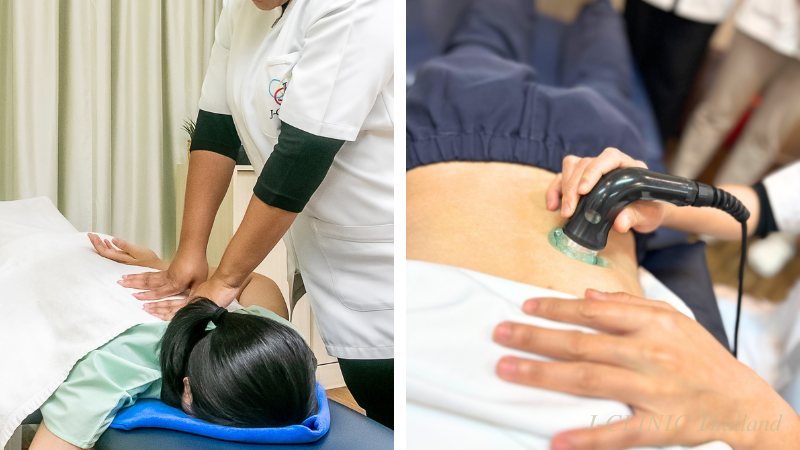
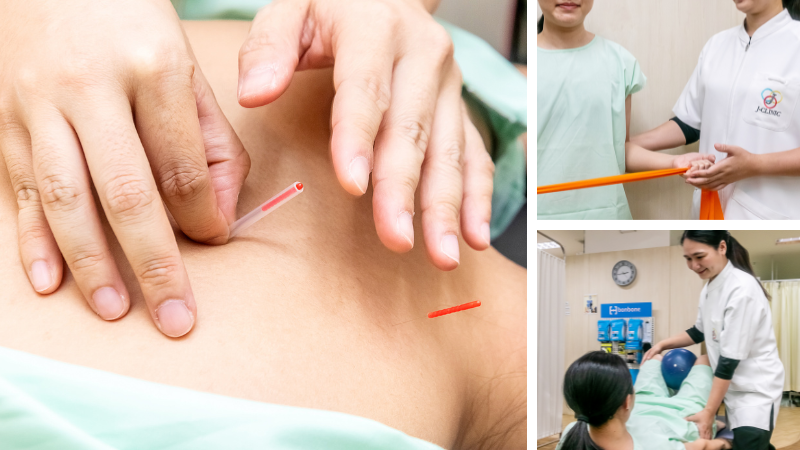
Depending on your condition, we may also combine manual therapy, acupuncture, physiotherapy, and exercise therapy to provide an individualized treatment approach.
If you have any questions about cupping therapy or would like to discuss your symptoms, please feel free to contact your nearest J-CLINIC.
Making a appointment and opening hours
- 📞Phrom Phong branch: 097-257-3577
- 📞Thonglor branch: 084-424-1299
- 📞Ekkamai branch: 097-245-7863