
Bangkok offers ideal conditions for golf year-round, and many expatriates regularly enjoy weekend rounds or weekday practice.
But if you spend weekdays sitting at a desk and then play golf only on weekends, you may end up with pain in your lower back, elbows, or wrists.
Golf-related pain often results not just from overuse, but from poor movement patterns, improper posture, limited range of motion, or lack of stability in the body.
In this post, we’ll explain common golf injuries and symptoms, their root causes, and how J-CLINIC’s physical therapy team can help you recover and prevent future problems.
Common golf injuries and symptoms
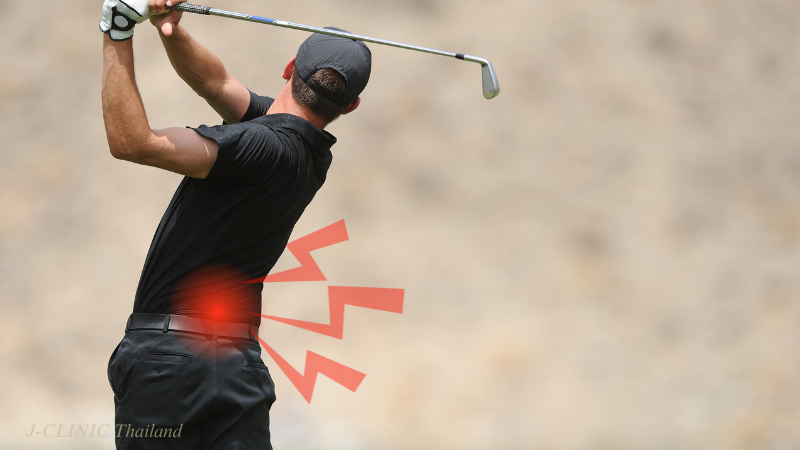
Lower back pain (“golfer’s back pain”)
Your lower back takes a heavy load from swinging motions, which involve repeated twisting and arching. Many people feel worsening pain during or right after a swing or the day after a round.
Elbow pain (“Golfer’s elbow”)
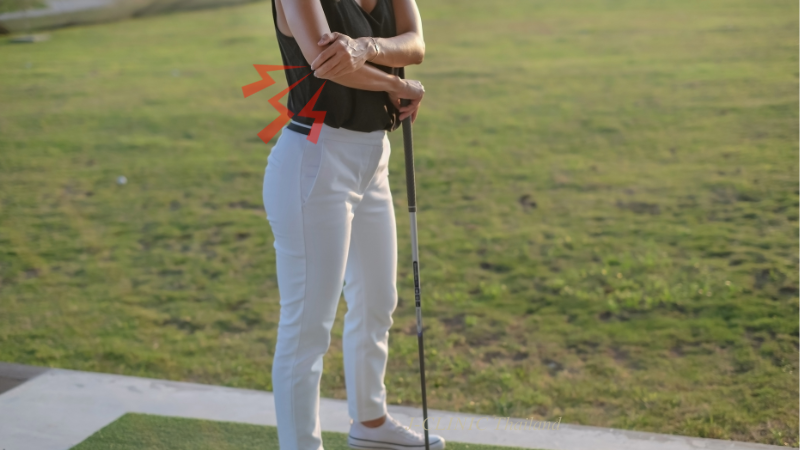
“Golfer’s elbow” comes from repeated stress on the inner side of the elbow during the downswing or at the moment of impact. The pain can persist even if X-rays show no visible damage.
Wrist pain
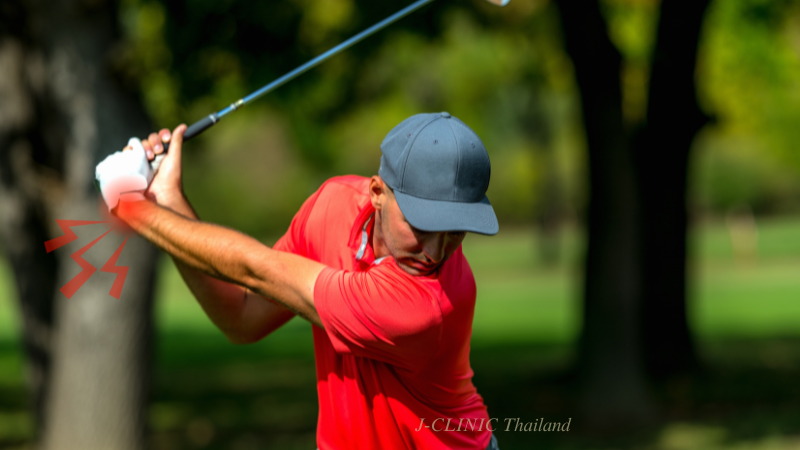
Hitting the ground often—such as with “fat shots”—can cause inflammation in the wrist joint.
The force of impact, repeated ground strikes, and gripping the club tightly all put strain on the wrists. Right-handed players often experience symptoms in their left wrist.
Why do golf injuries happen so often?
Golf involves repeating the same movements over and over, and each swing delivers sudden, high-impact stress to the body. When this is combined with poor posture and lack of movement from long hours of desk work, certain areas of the body can be overused and overloaded.

If your body core isn’t flexible or stable enough, your body may adjust to try to protect the back, elbows, or wrists—all of which can lead to pain.
Our evaluation and testing process
At J-CLINIC, we don’t just treat the painful spot—we look at the whole picture. We examine your posture, daily habits, and consider your body holistically to find the root cause of your pain and aim for long-term healing.

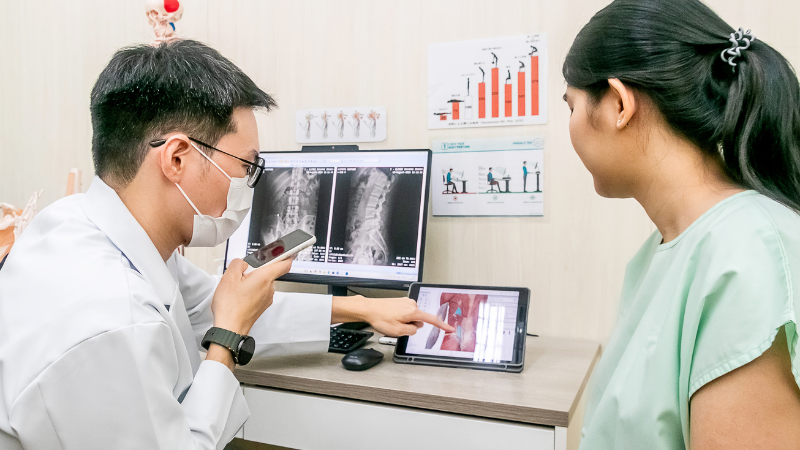
During your first visit, we’ll perform a full assessment that includes:
- a detailed medical history (including how long the pain has lasted, how often you play golf, and your daily habits)
- hands-on physical tests (to see what movements trigger pain and what reduces it)
- posture and movement analysis (while standing, sitting, and walking)
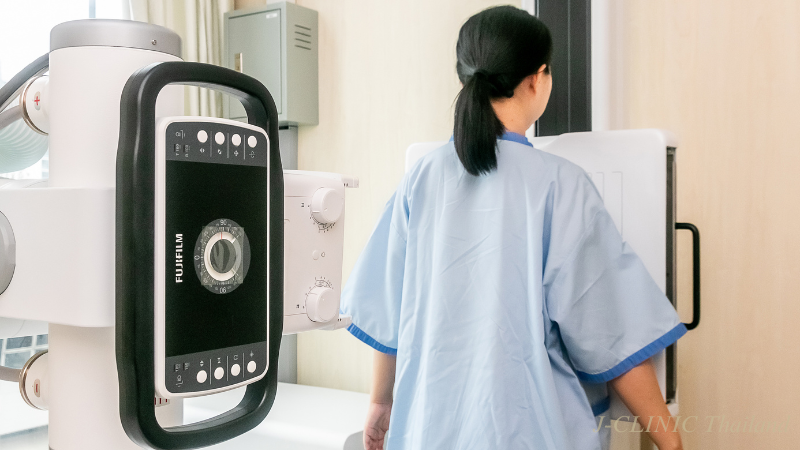
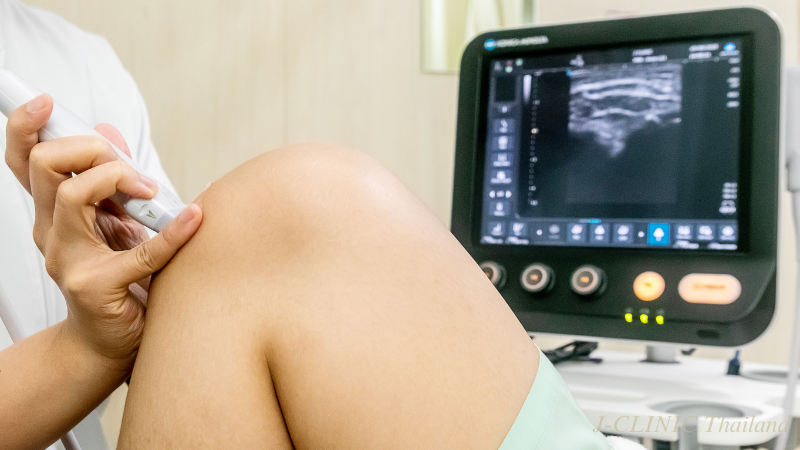
If needed, you may also get an X-ray or an ultrasound exam so we can check the condition of your bones, muscles, tendons, and ligaments. This helps us decide whether physical therapy is the right treatment for you or if you should see another specialist.
Our physical therapy treatments
Based on the assessment, we create a personalized treatment plan that can combine
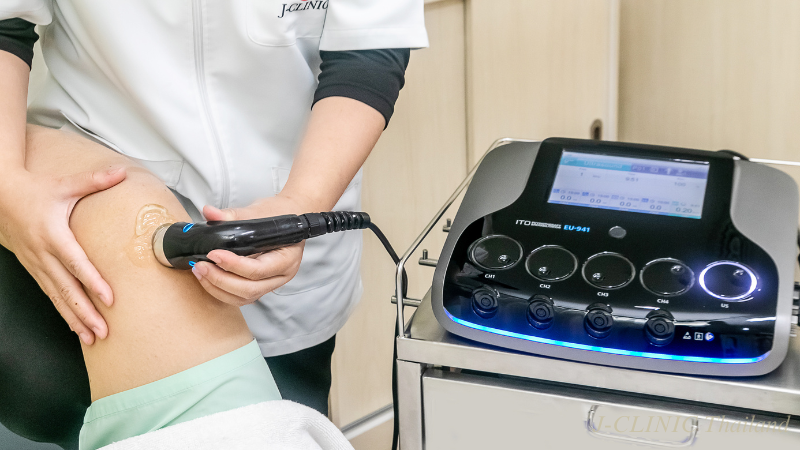
- ultrasound therapy and electric therapy, to reduce inflammation and relieve pain
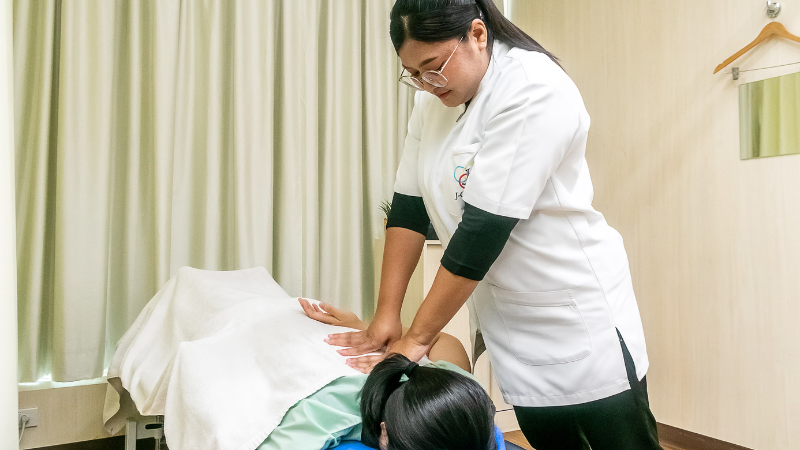
- manual therapy by trained therapists, to improve full-body coordination and left–right balance
- exercise therapy and rehabilitation, to improve flexibility and stability, aiming to maintain performance and prevent recurrences of pain
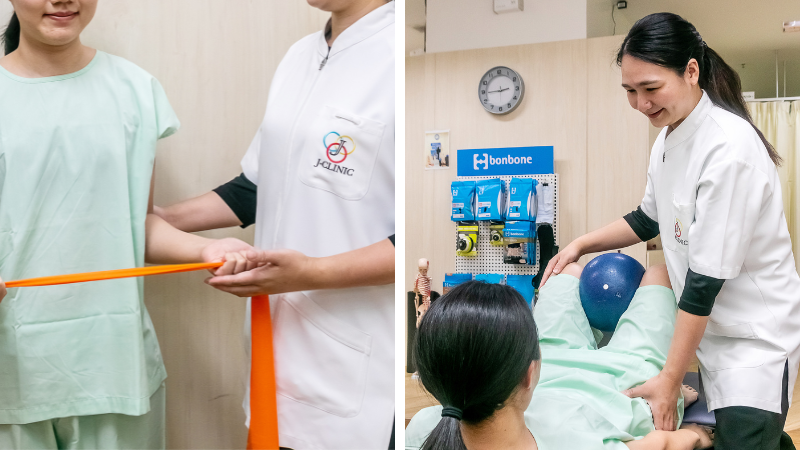
We may also recommend acupuncture or taping, depending on your symptoms.
This is ideal for you if you
- keep experiencing pain from golf
- your test results show that nothing is wrong but your symptoms persist
- want physical therapy based on a thorough assessment
Book an appointment or contact us
With proper care, you can stop your golf-related injuries and pain from becoming long-term or recurring.
J-CLINIC operates by appointment only. Please contact us via phone, Line, inquiry form, or Facebook to make your appointment.
Line